A Boston resident’s discovery of 1830s freedom papers highlights fragile records of free Black life
A family keepsake surfaces during a pandemic-era cleanout
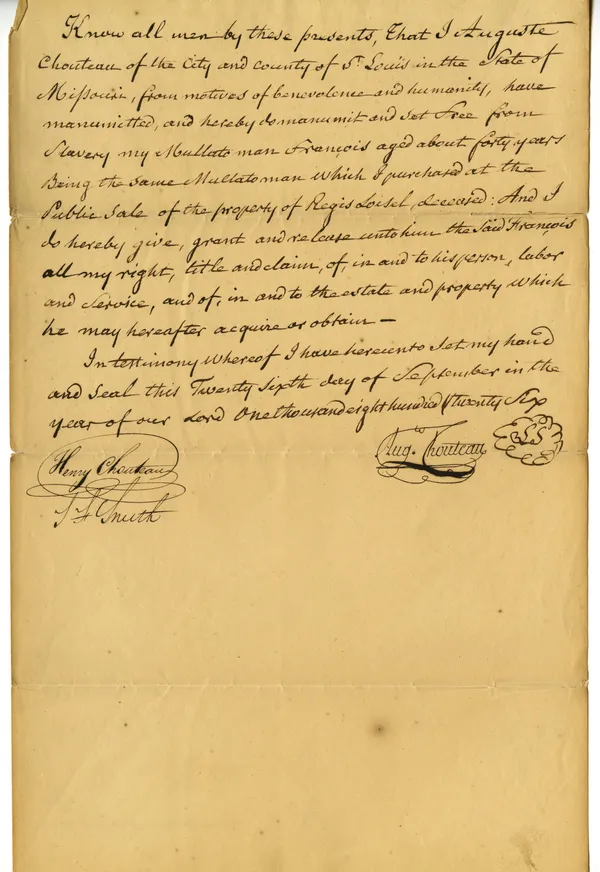
A Boston man sorting through his mother’s home during the COVID-19 lockdown in 2020 found an object he did not recognize: a small leather pouch holding a carefully folded, aging document. His mother identified it as an ancestor’s “freedom papers,” a form of documentation once carried by free Black Americans to prove legal status in an era when kidnapping and forced enslavement remained a persistent threat.
The document belonged to Samuel Jones, a man identified as being born free and raised in Anne Arundel County, Maryland. Its text includes physical descriptors used for identification, including height, complexion, and a scar on a hand—details typical of papers meant to be presented to officials or challenged by slave catchers.
What “freedom papers” were designed to do
In slaveholding states and border regions, free Black people were often required to possess written proof of freedom. These documents, sometimes called “free papers,” could serve as protection in everyday travel, work, and encounters with law enforcement, but they also underscored how precarious freedom could be. The language and format frequently emphasized the bearer’s identity marks, reflecting a system that treated mobility and personhood as something to be continuously verified.
Authentication and preservation in Boston
In January 2026, the Boston resident brought the papers to American Ancestors, the nonprofit genealogical organization based on Newbury Street. A conservator there examined the item’s materials and production characteristics and identified it as a genuine, very old document made on parchment. The paperwork included an 1817 seal date, while its production was assessed as occurring later, with a date of 1834 associated with the printed text.
Specialists noted that documents tied to marginalized communities are less commonly preserved in institutional collections, making intact family-held records particularly valuable. Preservation assessments focus on materials, inks, and manufacturing methods, which can help establish time period and authenticity.
Connecting the document to a living family tree
Beyond authentication, the find has become a starting point for reconstructing a multi-generation lineage. Researchers working with the family are examining how the papers were passed down through relatives, including a great-grandmother who kept the document and subsequent transfers within the family before it reached the current holder.
The work also intersects with broader efforts to recover the identities of enslaved and free people of African descent in American records—an area of research often hindered by incomplete archives, name changes, and gaps created by slavery.
- Document: freedom papers for Samuel Jones, identifying him as born free in Anne Arundel County, Maryland
- Key dates referenced: 1817 (seal date) and 1834 (document production date identified through examination)
- Discovery: found in 2020 during a home cleanout in Boston
- Next steps: conservation guidance and genealogical research to confirm family connections and historical context
Family-held records can fill gaps left by official archives, offering rare, verifiable details about free Black lives before the Civil War.
As researchers continue to evaluate the document’s condition and trace the lineage it represents, the episode illustrates how private households can unexpectedly hold primary-source records that deepen historical understanding—and how fragile that record can be without preservation, context, and careful verification.