Boston City Council moves toward restricting kratom sales as regulators cite rising concerns about potent derivatives
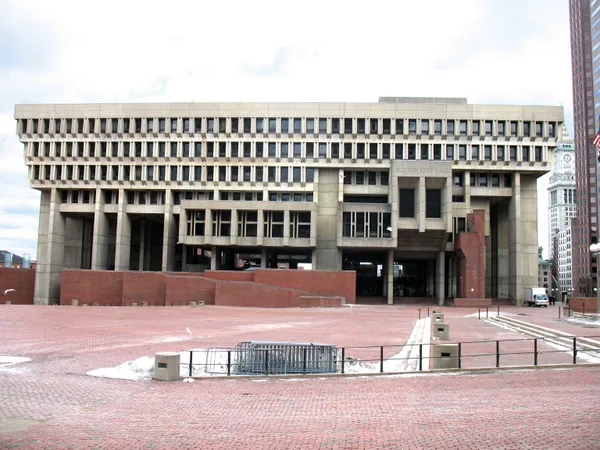
Boston launches formal review of kratom regulation
Boston city councilors are advancing a proposal that could restrict or prohibit the sale and distribution of kratom in the city, an herbal product derived from the Southeast Asian tree Mitragyna speciosa. The City Council’s Committee on Public Health, Homelessness, and Recovery scheduled a public hearing for Monday, March 9, 2026, to take testimony on Docket #0175, an order sponsored by Councilors John FitzGerald and Edward M. Flynn and referred to committee on January 28, 2026.
The order directs the committee to examine how kratom is sold locally and what municipal authority Boston may have to regulate it, including potential limits on retail availability.
Why kratom has become a fast-moving public health issue
Kratom is marketed in multiple forms, including powders, capsules, teas, and highly concentrated extracts sold in convenience retail settings. Public health scrutiny has intensified nationally as products containing 7-hydroxymitragynine (often labeled “7-OH”) have expanded in the marketplace. Federal regulators have described 7-OH as an opioid-like compound and, in 2025, moved to restrict certain 7-OH products through a scheduling recommendation under the federal Controlled Substances Act while distinguishing that action from “natural kratom leaf products.”
Clinical and surveillance data have also shaped the debate. U.S. poison centers have reported thousands of kratom-related exposures over time, and peer-reviewed analyses of poison-center data have documented serious medical outcomes in a portion of reported cases. Separately, a CDC review of overdose deaths across multiple states found kratom present in a subset of fatal overdoses and listed as a cause of death in a smaller number of cases, often alongside other substances.
Massachusetts’ patchwork rules: local bans and growing enforcement models
Massachusetts does not have a uniform statewide framework governing kratom comparable to cannabis regulation, leaving cities and towns to pursue their own public health approaches. Multiple Massachusetts communities have adopted local restrictions or bans in recent years, often through boards of health. Lowell, for example, adopted a regulation prohibiting the manufacturing, sale, and distribution of kratom, effective January 2, 2025. Other municipalities have paired kratom rules with restrictions on synthetically derived cannabinoids.
Outside Massachusetts, regulators have moved in different directions. Some states have adopted consumer-protection models that regulate labeling and product composition. Others have advanced more restrictive approaches, including scheduling actions; Connecticut, for example, has issued guidance indicating kratom has been designated a Schedule I controlled substance under state scheduling regulations, triggering prohibitions on possession and sale.
What the Boston hearing is expected to examine
The City Council hearing is expected to focus on the city’s options along a spectrum ranging from tighter retail standards to a full sales ban. Key issues likely to be addressed include:
- Scope of products: traditional kratom leaf versus concentrated extracts and 7-OH products.
- Retail footprint: availability in gas stations, smoke shops, and convenience stores versus specialty retailers.
- Public health and safety: adverse event reports, risks of dependence and withdrawal, and product contamination concerns.
- Enforcement mechanics: penalties, inspections, and coordination with public health authorities.
The March 9 hearing is procedural rather than a final vote, but it positions Boston to draft an ordinance or a regulatory framework that could materially change where—and whether—kratom can be sold within city limits.
Any resulting policy would add Boston to a growing list of municipalities reassessing kratom amid heightened attention to concentrated opioid-like derivatives and uneven regulation across New England.