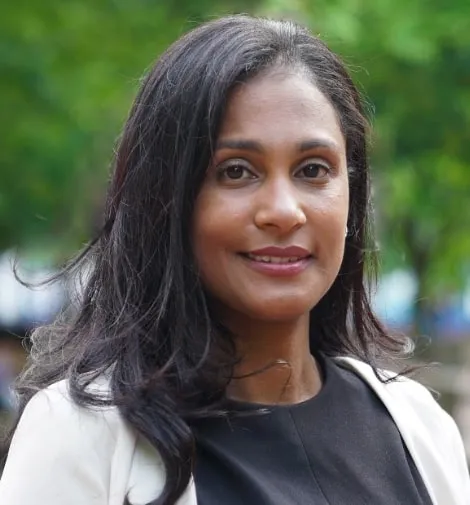
Boston election commissioner Eneida Tavares steps down as state receiver continues overseeing city voting operations
Leadership change arrives during ongoing state oversight
Boston is searching for a new leader for its Election Department after Elections Commissioner Eneida Tavares left the post on Feb. 20, even as state-appointed receivership continues to oversee the city’s election operations.
City officials said Tavares departed voluntarily and was not removed for disciplinary reasons. The administration also said she remains employed by the city in the Public Facilities Department. In the interim, City Registrar Paul Chong is serving as acting head of the Election Department while the city recruits a replacement.
Receivership followed ballot shortages and communication breakdowns in 2024
The state assumed direct oversight after failures during the Nov. 5, 2024, presidential election produced ballot shortages at multiple polling locations, equipment problems, and delays that left some voters waiting in long lines. A subsequent state review concluded that Boston did not ensure enough ballots were delivered to every precinct at the start of Election Day, despite state requirements intended to guarantee that a ballot is available for every voter.
The review also documented operational and communications issues that compounded shortages, including the inability to quickly identify which precincts needed additional ballots and to prioritize emergency deliveries. The investigation found that the city’s election office missed a large volume of calls from poll workers and residents attempting to report problems, forcing some to seek help from state officials. Boston police officers were dispatched to transport additional ballots before polls closed.
What the state required Boston to change
The state intervention required Boston to restructure core parts of election administration, including ballot planning, training, and Election Day communications. The earlier state findings described a ballot-distribution approach that initially targeted roughly 80% of registered voters per precinct, combined with a calculation error that reduced the number of ballots that actually arrived at some locations.
- Revised ballot-quantity calculations and delivery planning to meet state requirements.
- Improved training materials and clearer procedures for Election Day contingencies.
- Real-time communication systems between precincts and central election staff.
Operational changes tested in Boston’s 2025 municipal elections
Following the 2024 problems and the start of receivership, Boston and state officials implemented a series of operational changes ahead of later elections, including a dedicated hotline for poll workers, expanded staffing to handle calls, and wider use of electronic check-in tools. City officials reported that Boston’s November 2025 municipal election proceeded without major reported disruptions, citing complete ballot delivery to the city’s 275 precincts and significantly faster response times for requests for assistance.
Receiver remains in place as city recruits a commissioner
As the commissioner search proceeds, the state receiver remains responsible for overseeing Boston’s election operations through upcoming state election cycles. The leadership transition places added attention on continuity: maintaining reforms already underway, ensuring day-to-day readiness across precincts, and sustaining clear lines of authority between City Hall, the Election Department, and state oversight during the recruitment process.