Boston marks 150 years since Alexander Graham Bell’s first intelligible telephone call to Thomas Watson
A milestone born in a Boston experiment
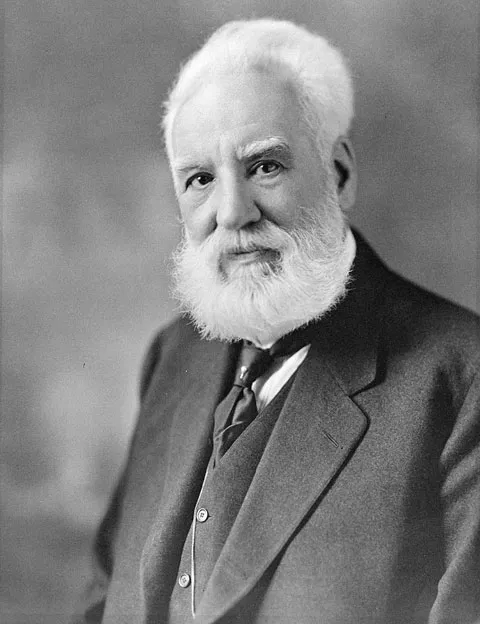
Tuesday marks 150 years since a short exchange in Boston became a turning point in communications history: the first successful transmission of a clearly intelligible spoken sentence by telephone. On March 10, 1876, inventor Alexander Graham Bell spoke to his assistant, Thomas Augustus Watson, using an early voice-transmission device in a Boston workspace, producing the words most often recorded as “Mr. Watson, come here, I want to see you.”
The experiment came days after a major legal milestone. Bell received a U.S. patent for the telephone on March 7, 1876, and continued testing equipment designed to convert sound into electrical signals and reproduce them at the receiving end. The March 10 test is widely treated as the first time a complete, intelligible sentence traveled by wire from one person to another.
Where it happened—and why the location is debated
Accounts of the precise Boston location vary across historical records. Some descriptions place the experiment in a boarding house laboratory at what was then 5 Exeter Place, near today’s Downtown Crossing area. Other references point to addresses associated with Bell’s workspaces and partners in the city’s commercial district during the same period. While the wording of the sentence and the date are well established, the shifting street grid and redevelopment in the area have complicated efforts to identify a single, undisputed spot that corresponds neatly to modern addresses.
Bell’s March 10, 1876 transmission is generally characterized as the first clear, intelligible sentence carried by telephone.
From room-to-room speech to networks and industry
The March 1876 demonstration was not the end point, but a beginning. Bell and Watson’s subsequent work expanded the telephone from short-range tests to communications over longer distances. Later milestones included early experiments over outdoor lines in 1876, the rapid emergence of dedicated telephone lines and exchanges, and the formation of corporate structures that helped commercialize the technology. Over time, the Bell Telephone Company evolved into a series of successor entities that played central roles in building U.S. telephone infrastructure.
How Boston commemorates the first call today
In present-day Boston, the event is memorialized through plaques in the Downtown Crossing area that connect the city’s streetscape to the breakthrough achieved in 1876. The markers reflect Boston’s broader role as a hub for late-19th-century experimentation in speech, hearing, and electrical engineering—fields that intersected in Bell’s work and helped set the stage for a communications revolution.
Date of first intelligible telephone sentence: March 10, 1876
Key figures: Alexander Graham Bell and Thomas A. Watson
Significance: proof that speech could be transmitted electrically and reproduced clearly
One hundred and fifty years later, the anniversary underscores how a single successful test in Boston helped launch a technology that would reshape commerce, emergency response, journalism, and everyday social life—long before voice became just one part of modern digital networks.