Boston residents confront anxiety and competing protests after U.S.-Israeli strikes in Iran widen conflict
A local response shaped by family ties, political divides, and uncertainty over what comes next
Boston-area residents with personal and professional connections to Iran are navigating a fast-moving conflict that began with coordinated U.S. and Israeli strikes on Feb. 28, 2026. The initial operation killed Iran’s Supreme Leader, Ayatollah Ali Khamenei, and set off a broader military confrontation that has since included retaliatory Iranian attacks across the region and continuing strikes inside Iran.
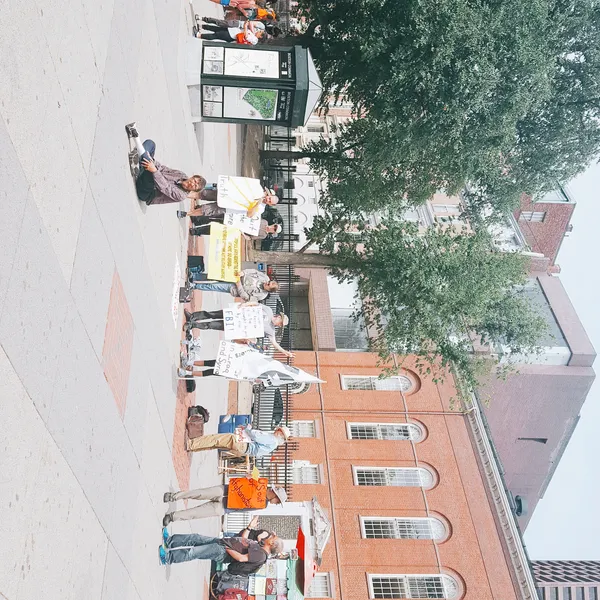
In Greater Boston, the immediate impact has been felt in two parallel ways: private fear for loved ones abroad and highly visible public demonstrations at major civic spaces, including Boston Common and Copley Square.
Fear for relatives and disrupted communications
Iranian Americans in the region describe routines built around constant checks for news, damage reports, and intermittent contact with family members. For some, the anxiety is heightened by reports of strikes affecting residential areas and public facilities and by the uncertainty of how quickly the conflict could expand.
Beyond immediate safety concerns, community members say the conflict has complicated travel plans, raised worries about broader instability, and intensified debates over the legal basis for U.S. military action and congressional oversight.
Protests, counter-rallies, and competing narratives
Demonstrations in Boston have reflected sharply different interpretations of the strikes and the risks of escalation. On Feb. 28, separate gatherings took place in downtown Boston, with one event supporting the military operation while another denounced it and warned of a prolonged war. Additional protests followed on March 3, with organizers and participants arguing that the strikes could lead to years of fighting and large public costs.
Many protesters have framed their opposition around constitutional war powers questions and the international legal standards that limit when force may be used between states.
Congressional action becomes a focal point
The conflict has also pushed war powers legislation back into the center of political debate. Massachusetts officials have publicly weighed in as Congress considered measures aimed at limiting or ending unauthorized hostilities. In early March, lawmakers held votes on war powers efforts tied to the Iran conflict, highlighting both partisan divisions and the narrow margins that can shape U.S. policy during rapidly evolving crises.
Civilian harm allegations intensify scrutiny
As the war continued, international scrutiny increased after reports of significant civilian casualties. Separate reporting and subsequent analysis around a Feb. 28 blast at an elementary school in Minab indicated damage patterns consistent with an airstrike near an adjacent site linked to Iran’s Revolutionary Guard. U.S. officials have said the incident was under investigation, while responsibility remained contested.
Public opinion shows skepticism about military action
Polling conducted immediately after the initial strikes found a majority of U.S. adults disapproved of the decision to take military action in Iran, underscoring the domestic political constraints facing the administration even as operations overseas continued.
- Key local issue: the safety of relatives and friends in Iran
- Key political issue: congressional authorization and oversight of hostilities
- Key humanitarian issue: credible accounting of civilian casualties and investigations of disputed strikes