Boston University-area free payphone links Commonwealth Avenue pedestrians with seniors in Reno for live conversations
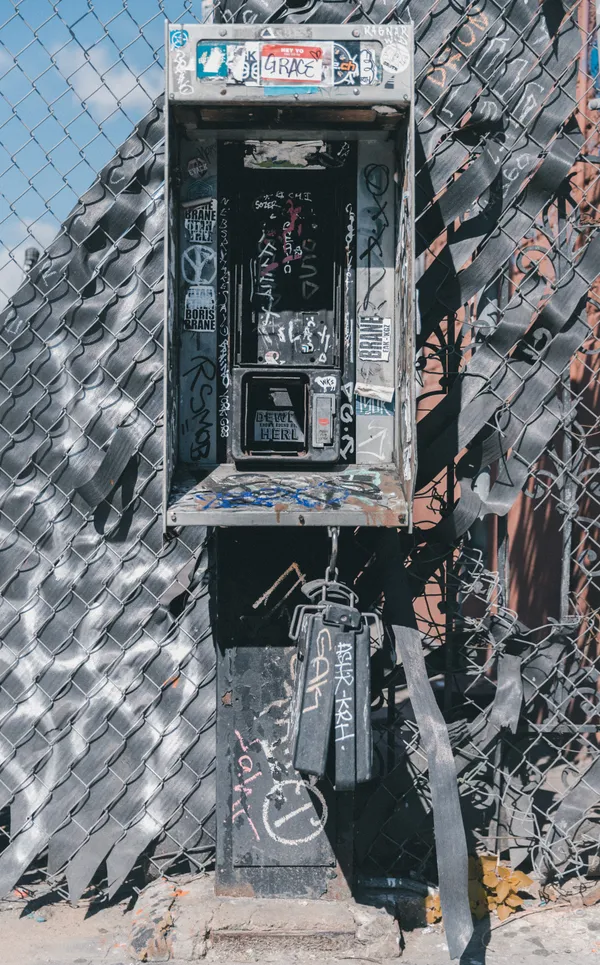
A sidewalk payphone designed for one purpose
A bright yellow payphone installed along Commonwealth Avenue near Boston University is offering passersby a free, one-touch connection to older adults more than 2,500 miles away. The phone, labeled “call a boomer,” automatically dials a counterpart device placed inside a senior housing complex in Reno, Nevada, creating a dedicated line intended to spark unscheduled conversations between strangers of different generations.
The Boston-area phone was installed outside Pavement Coffeehouse at 736 Commonwealth Ave. The setup is designed to work in both directions: the Reno device is labeled “call a zoomer,” allowing residents at the senior community to reach whoever picks up on the Boston side.
How the system works — and what happens if nobody answers
Users on either end can pick up the receiver to place the call without coins, cards, or dialing. If the call is not answered, the system allows voicemails to be left. A posted message on the phone describes the project’s stated aim as encouraging “generational connection through meaningful conversations,” citing loneliness as a problem affecting both younger and older adults.
The project has also included recording conversations, with plans to use excerpts in social media content. The installation is being hosted under a time-limited arrangement, with an initial period of about one month at the Commonwealth Avenue site, after which organizers may decide whether to extend operations based on usage.
Who organized the installation
The installation was organized by Matter Neuroscience, a company founded in 2019 that operates a consumer-facing app focused on the neuroscience of happiness and related behavioral practices. The company has described the payphone concept as a “social experiment” intended to make it easier for people to speak with someone outside their usual social circles.
The Boston-to-Reno pairing follows earlier versions of the same concept deployed in other U.S. cities, with organizers previously experimenting with connections framed around political differences before shifting to a generational focus.
Why a payphone — and why here
The decision to use a payphone format is central to the project’s design. A single-purpose, public device lowers barriers to participation by eliminating the need for apps, accounts, or exchanging numbers, while also creating a visible prompt in a high-foot-traffic area. The location near Boston University places it in a corridor heavily used by students, staff, and commuters.
Boston-area endpoint: Payphone outside Pavement Coffeehouse, 736 Commonwealth Ave., near the Boston University campus.
Reno endpoint: A phone installed in a senior housing complex, positioned for residents to answer or initiate calls.
Cost to users: Free.
Fallback if unanswered: Voicemail capability.
The installation repurposes a familiar piece of public infrastructure into a direct, two-way line between age groups, turning a quick sidewalk moment into an invitation for conversation.
What is known — and what remains unclear
While the phone’s purpose, location, and operating mechanics have been publicly described, key details have not been fully specified, including the total duration beyond the initial hosting window, how many calls are expected or considered successful, and how recorded material will be selected, stored, and used. Organizers have indicated they will assess popularity before deciding on any extension.