Heightened ICE document checks at Minneapolis airport raise questions for Boston-area passengers connecting through MSP
What is happening at Minneapolis–Saint Paul International Airport
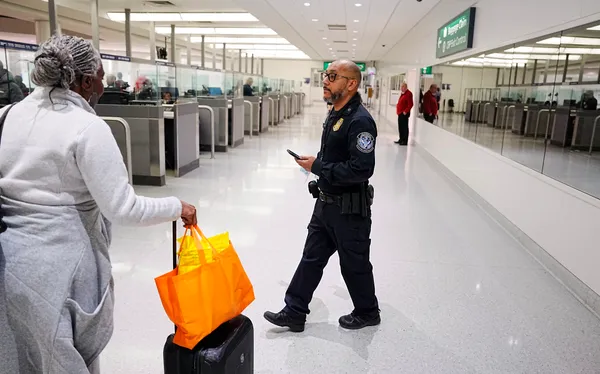
Federal immigration enforcement activity has become more visible at Minneapolis–Saint Paul International Airport (MSP) amid a broader increase in operations in the Twin Cities region. Reports from Minnesota indicate that Immigration and Customs Enforcement (ICE) agents are conducting document checks involving airport workers and, in some cases, travelers in areas that can include spaces near boarding gates and jet bridges.
Local airport authorities have said that they do not receive advance notice of immigration enforcement activity and do not coordinate it, while noting that federal regulations allow federal agents broad access to airport property, including public areas and secured zones. Separately reported sightings of removal-related activity at MSP have also heightened attention on the airport’s role as a transportation node during the current enforcement surge in Minnesota.
Why this matters for Boston travelers
For Boston-area passengers, MSP is a major domestic hub used for connections between New England and destinations across the Upper Midwest and West. Increased enforcement visibility can affect travelers in three practical ways: time, documentation readiness, and uncertainty during unexpected interactions in the terminal.
Connection timing: Any law-enforcement activity that draws crowds, reroutes foot traffic, or triggers additional questioning can add friction in gate areas. Even small delays can matter for short connections, especially during winter weather disruptions common to both Boston and Minneapolis.
Documentation: Domestic air travel is governed primarily by Transportation Security Administration (TSA) identification rules at checkpoints. Since May 7, 2025, TSA has required adults to present a REAL ID-compliant license or another acceptable ID, such as a passport, to clear security for domestic flights. This requirement applies regardless of immigration status and is separate from any ICE encounter elsewhere in the airport.
Mixed passenger flows: MSP handles international arrivals as well as domestic connections. Travelers moving between terminals, rechecking bags, or transitioning after an international segment may find themselves in areas where multiple federal authorities operate, each with distinct responsibilities.
How airport enforcement differs from TSA screening
TSA screening is designed to determine whether a passenger may enter the sterile area and board a flight, focusing on identity verification and security threats. ICE’s mandate is immigration enforcement. These systems can operate in the same building but under different legal authorities and procedures.
That distinction matters because a traveler who is fully compliant with TSA identification requirements may still face questions from other federal officers in public areas of an airport. The scope, frequency, and targets of such encounters can vary by location and operational posture.
What travelers can do now
Carry a REAL ID-compliant license or an alternative TSA-accepted ID for all domestic segments, including short connections.
If traveling on a noncitizen status, consider carrying documentation appropriate to that status in addition to standard flight identification, particularly when itineraries involve hubs reporting increased enforcement activity.
Build additional connection time when routing through MSP during periods of heightened operational activity and winter delays.
For Boston travelers connecting through MSP, the immediate risk is less about flight eligibility and more about time, documentation readiness, and avoiding last-minute complications during connections.