Massachusetts police and firefighters warn residents to stay off pond and lake ice amid fluctuating temperatures
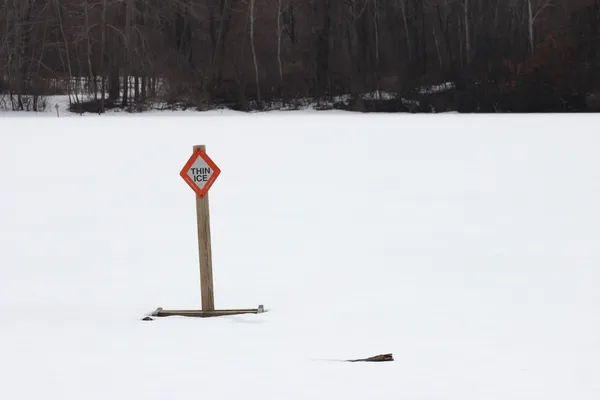
Public safety agencies renew ice warnings as conditions shift across Massachusetts waterways
Police and fire officials across Massachusetts are urging residents to stay off ice-covered ponds, lakes, rivers, and streams, citing rapidly changing conditions that can turn a surface that appears solid into a life-threatening hazard. The renewed messaging comes as winter temperatures continue to fluctuate, a pattern that can weaken ice even after periods of sustained cold.
Public safety officials emphasize a core point: there is no way to guarantee ice is safe. Ice strength can vary widely on the same body of water, and two nearby ponds can freeze differently based on depth, currents, snow cover, and recent weather. Flowing water—such as rivers, streams, and areas near inlets and outlets—can remain dangerously thin even when other sections look frozen.
How officials advise residents to assess risk
While some people still venture onto ice for recreation such as skating or ice fishing, state safety guidance stresses that appearance alone is unreliable. Clear ice is generally stronger than white, milky, or snow-covered ice, and officials recommend measuring thickness directly rather than guessing based on what the surface looks like.
- Ice does not freeze uniformly; thickness can change within a few feet.
- Snow can insulate ice and conceal cracks and weak spots.
- Ice over moving water and currents is less predictable and often more dangerous.
- Newly formed clear ice can be stronger than older, partially thawed ice, even when the older ice appears thicker.
Ice thickness guidelines cited by Massachusetts safety materials
State safety guidance provides general thickness thresholds for clear, blue ice on lakes and ponds, while noting that guidelines are not guarantees and conditions can change quickly.
- 2 inches or less: stay off the ice.
- About 4 inches (clear, newly formed ice): may support a person on foot, including ice fishing.
- 5 inches: commonly cited for snowmobile or ATV travel.
- 8–12 inches: commonly cited for a car or small pickup truck.
What to do if a person or pet falls through
Officials repeatedly warn bystanders not to attempt a rescue by walking onto the ice, because would-be rescuers can quickly become victims themselves.
Guidance advises calling 911 immediately and trying to help from shore using the “reach or throw” approach—extending a long object such as a branch, pole, or ladder, or throwing a buoyant object or rope—while waiting for trained responders with specialized equipment.
For residents in urban areas, officials also highlight that maintained skating rinks are designed for controlled conditions, unlike natural bodies of water where ice quality can change hour to hour.