Massachusetts sees brief winter warmup as thawing snow fuels potholes, roof ice dams, and leaks
A short-lived thaw brings familiar late-winter risks
A modest rise in temperatures across Massachusetts is providing a break from the cold, but the thaw is also accelerating a costly cycle for drivers and homeowners: melting snow and ice followed by refreezing. The result is an increase in potholes on roads and ice dams on roofs, two problems that often spike during New England’s freeze-thaw swings.
Why potholes multiply when temperatures bounce
Potholes typically worsen when water seeps into cracks in pavement, freezes, expands, and then loosens asphalt as temperatures rise again. Repeated cycles can rapidly enlarge small defects, particularly on high-traffic corridors and at seams near utility cuts.
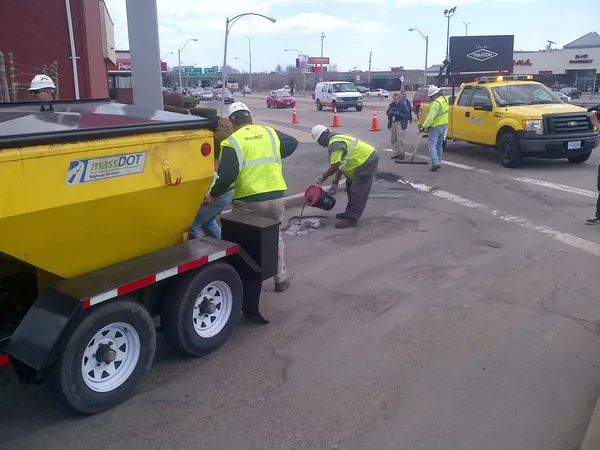
In Massachusetts, reporting and response depend on who maintains the roadway. Hazards on state highways are handled through the Massachusetts Department of Transportation (MassDOT), which operates a dedicated pothole hotline. Municipal streets are handled locally through city and town public works systems, including Boston’s 311 service for street and sidewalk concerns.
- State highway hazards: reported to MassDOT’s Highway Division via its hotline or district offices.
- City and town streets: reported to the local Department of Public Works; Boston residents can use 311 for potholes and related hazards.
Ice dams: what they are and why they can leak fast
Homeowners are also confronting ice dams—ridges of ice that form along roof edges when snow melts and refreezes at colder eaves. Heat loss from the home and solar warming can melt snow higher on the roof while the lower edge remains cold enough to freeze runoff. When an ice dam blocks drainage, water can back up under shingles and enter the building envelope, leading to ceiling stains, wet insulation, and interior damage.
Ice dams are a repeat winter hazard in Massachusetts, particularly during periods when daytime melting is followed by hard overnight freezes.
Safety and prevention: what state guidance emphasizes
State safety guidance warns residents to avoid dangerous removal methods and to treat heavy snow and ice as both a fall risk and a structural risk. Recommended precautions include maintaining gutters and drainage paths so meltwater can flow, and using safer snow-removal approaches rather than open flames or improvised heating tools. The state also advises against attempting to remove ice from utility wires or meters and encourages contacting utility providers when ice affects service equipment.
Insurance and damage: what homeowners should know
Winter weather, including ice dams and burst pipes, is a major driver of property claims. State insurance guidance highlights that maintenance and preparedness matter, encouraging residents to keep homes adequately heated, protect plumbing, and maintain roofs and gutters to reduce the chance of water intrusion during thaw periods.