MBTA Commuter Rail derailment outside South Station disrupts service and triggers cancellations on key lines
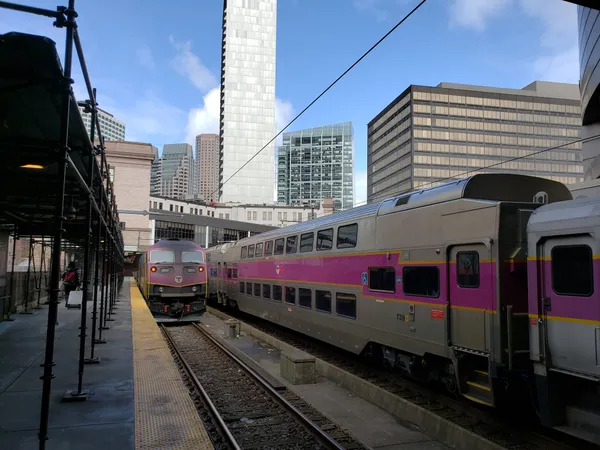
What happened and where
A Massachusetts Bay Transportation Authority (MBTA) Commuter Rail train experienced a slow-speed derailment just outside Boston’s South Station on Saturday, February 8, 2025, disrupting rail traffic at one of New England’s busiest passenger hubs. Officials described the incident as an “upright” derailment, indicating the train remained standing while at least one wheelset left the rail.
The derailment occurred at the throat of the terminal, where multiple tracks converge into the station’s platforms. Because that area is a chokepoint for both commuter and intercity service, even a localized incident can quickly ripple across several lines and operators.
Passengers, injuries, and immediate operational impacts
The train involved was inbound from Providence, Rhode Island. Reports from transit operators indicated about 130 passengers were on board and no injuries were reported at the time of the incident. The MBTA said all service moving through South Station experienced delays, and the disruption led to targeted cancellations on some commuter rail lines.
Two commuter rail lines—Fairmount and Needham—saw cancellations as dispatchers worked to manage congestion and route trains around the affected area. Riders on other lines using South Station were advised to anticipate delays as crews worked to clear equipment and restore normal track access.
Event type: slow-speed upright derailment
Location: outside South Station, Boston
Injuries: none reported
Service effects: systemwide South Station delays; Fairmount and Needham cancellations reported
Amtrak service affected on the Northeast Corridor
South Station is also the Boston terminal for Amtrak’s Northeast Corridor trains. The derailment disrupted Amtrak operations between Boston and Providence during the afternoon, with multiple cancellations reported and lingering delays even after partial restoration. The corridor segment is among the most heavily used passenger rail routes in the United States, and it shares critical approach trackage and operating windows with MBTA commuter service near the station.
Investigation and what typically follows
Officials said an investigation was underway. For derailments in terminal areas, investigators typically focus on track geometry, switches, signal indications, train handling speed, and equipment condition, along with any recent maintenance or weather-related factors that could affect rail adhesion or switch performance. Clearing and inspection work in the approach zone is often required before full-speed operations can resume, even when a train remains upright and no injuries occur.
South Station’s track approaches operate as a shared, high-density corridor for commuter and intercity trains, making small disruptions capable of producing network-wide delays.
What riders should expect during similar incidents
In terminal-area derailments, agencies commonly prioritize restoring safe access to platforms, then progressively return service by reducing speeds through the affected zone, reassigning trains to alternate tracks, and selectively canceling lower-frequency branches to protect overall throughput. Riders are typically advised to monitor real-time service alerts and allow extra travel time until inspections and track clearance are complete.