MFA Boston layoffs prompt questions over finances, workforce impact, and the museum’s DEI-related staffing changes
Workforce reductions and budget pressures
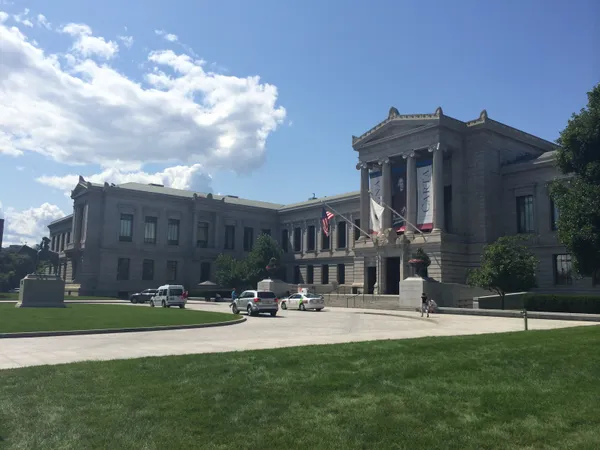
The Museum of Fine Arts, Boston (MFA) has carried out a significant workforce reduction as it confronts a projected multi-million-dollar deficit. The museum has laid off 33 employees and eliminated 23 additional positions that were vacant, a combined reduction described by museum leaders as part of a restructuring aimed at long-term financial sustainability.
MFA leadership has said the cuts are intended to address a “growing structural deficit” and reposition the organization around visitor experience, community engagement, and operational efficiency. The museum has stated that the layoffs represent 6.3% of its active employees, and that the overall staffing actions are expected to save $5.4 million—an amount that, by the museum’s own assessment, would only partially reduce the projected shortfall.
Union response and operational concerns
The union representing many MFA employees, United Auto Workers Local 2110, has said 16 of the affected workers are union members, with the remaining layoffs affecting non-union staff. The union has raised concerns about how the reductions will affect workloads and day-to-day operations, and has sought detailed information on the rationale for the layoffs and what measures were pursued before job cuts were implemented.
Union representatives have also said they expect to meet and bargain with the museum over the layoffs and their impacts, including whether alternatives exist to avert further reductions and how responsibilities and sacrifices are distributed across the organization.
Scrutiny over who was cut and what roles change
The layoffs have drawn heightened attention beyond the museum’s financial outlook because the reductions included senior, visitor- and community-facing roles. In particular, the staffing changes have triggered public criticism that the restructuring could reduce institutional capacity for inclusive programming and community outreach, and that the impact of the layoffs may fall disproportionately on nonwhite employees in some curatorial and education-related areas.
MFA leadership has disputed claims that the layoffs were designed to target particular groups or to diminish diversity, equity, and inclusion work. The museum has framed the restructuring as institution-wide and tied to budget realities, while acknowledging that the decisions were painful and would not, on their own, close the projected deficit.
Restructuring plan and the museum’s stated priorities
As part of the reorganization, the museum has described the creation of a new division that consolidates most visitor-facing staff and prioritizes audience experience. Leadership has also cited a renewed focus on institutional strategy, alongside ongoing responsibilities related to collections care and core operations.
Context: repeated layoffs and post-pandemic cultural economics
This is the second round of layoffs at the MFA in fewer than six years. In 2020, the museum eliminated 113 positions, including layoffs and voluntary early retirements, during the acute phase of the pandemic’s disruption to cultural institutions.
The MFA’s current financial challenge reflects pressures seen across the museum sector: shifts in visitor behavior, reduced membership levels compared with pre-pandemic benchmarks, and rising operating costs that can outpace revenue growth. Against that backdrop, the MFA’s job cuts are now being examined both as a fiscal turning point and as a test of how the institution balances budget constraints with public-facing commitments.
- 33 employees laid off; 23 vacant roles eliminated as part of restructuring.
- Museum projects $5.4 million in savings, alongside a projected $13 million deficit.
- Union says 16 laid-off employees are members of UAW Local 2110.
The museum has described the layoffs as necessary to address a structural deficit, while critics argue the staffing changes could weaken community-facing and inclusion-focused work.