Unpublished Whitey Bulger manuscript describes LSD prison experiments, fugitive-era Boston returns, and O.J. Simpson trial fears
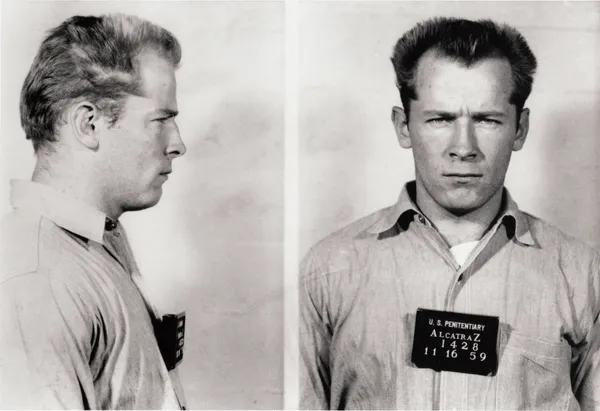
A new window into a long-running Boston crime saga
An unpublished manuscript attributed to James “Whitey” Bulger offers a fresh, document-based view into how the late South Boston crime boss sought to shape the story of his life while he was a fugitive. The writing, described as a draft “tell-all,” revisits episodes spanning Bulger’s early incarceration, his decades-long underworld career, and the years he spent on the run before his 2011 arrest.
LSD testing: a recorded episode from Bulger’s federal custody
One of the manuscript’s central threads concerns Bulger’s participation in LSD experiments while he was imprisoned in the 1950s at a federal penitentiary in Atlanta. Publicly available records and earlier reporting have established that Bulger was among inmates exposed to LSD as part of Cold War-era research later associated with CIA-backed programs. In notes and later accounts, Bulger described the experience as psychologically destabilizing and tied it to periods of fear, disorientation, and intrusive memories.
The manuscript’s treatment of the episode does not alter the historical fact pattern: Bulger’s criminal culpability in later years was litigated decades afterward, and his 2013 federal racketeering trial in Boston did not hinge on the LSD testing. He was convicted and sentenced to life in prison.
Claims about returning to Boston while on the run
The manuscript also addresses Bulger’s time as a fugitive, including assertions that he re-entered the Boston area on multiple occasions “to take care of business.” Such claims have long circulated around the case, but the practical details have remained difficult to verify publicly given the clandestine nature of fugitive travel and the limited documentary record. Bulger was captured in June 2011 in Santa Monica, California, after roughly 16 years as a federal fugitive.
- Bulger fled in the mid-1990s after learning of an impending indictment.
- He was returned to Boston for prosecution and tried in 2013 in federal court.
- He was killed in federal custody in 2018 after being transferred to a West Virginia prison.
FBI corruption narrative and “framing” allegations
Another section centers on Bulger’s long-disputed relationship with federal law enforcement. Court proceedings and government acknowledgments over the years have established that Bulger provided information to the FBI and that his handling raised profound corruption concerns inside the Boston office. In the manuscript, Bulger argues that former FBI agent John Connolly—convicted in connection with events tied to Bulger’s criminal enterprise—was “framed,” a claim that has been contested across multiple court and investigative venues.
The manuscript portrays Bulger as reacting with anger to books and public accounts about him, and frames the draft as an effort to rebut allegations and re-litigate responsibility for past misconduct.
O.J. Simpson trial references: fear, publicity, and criminal storytelling
The manuscript’s references to the O.J. Simpson trial are presented as part of Bulger’s broader discussion of media spectacle, public fear, and the perceived power of courtroom narratives. The Simpson case—one of the most televised criminal trials in U.S. history—became a cultural marker for how celebrity, evidence, and public opinion can collide. In Bulger’s account, it is invoked less as legal analysis than as a symbol of the risks posed by publicity and the uncertainties of trial outcomes.
Taken together, the manuscript reads as an attempt to control legacy through selective recollection—recounting known historical episodes, disputing settled conclusions, and amplifying contested interpretations that continue to shape how Boston’s most notorious criminal era is remembered.